Deprecated: strtr(): Passing null to parameter #1 ($string) of type string is deprecated in /chroot/home/a40b7614/774635bdc8.nxcli.io/html/wp-content/plugins/moosend-email-marketing/vendor/moosend/website-tracking/src/Utils/Encryption.php on line 8 Deprecated: urlencode(): Passing null to parameter #1 ($string) of type string is deprecated in /chroot/home/a40b7614/774635bdc8.nxcli.io/html/wp-content/plugins/moosend-email-marketing/vendor/moosend/website-tracking/src/Payload.php on line 202 newsletter – Page 4 – SoftwareArchitect.ca

Tag: newsletter

  • Azure World Newsletter – Issue 3.19

    Azure World Newsletter – Issue 3.19

    October 19, 2022

    Welcome to the nineteenth edition of the Azure World Newsletter in 2022.

    First, I’m sorry I didn’t send a newsletter two weeks ago. I was traveling during that time, and I decided to wait until after Ignite when there would be much more relevant news to talk about.

    Speaking of Microsoft Ignite, it was last week. I’ll be covering a couple of interesting announcements in this newsletter. I believe the session videos are still available for viewing, so head to the Ignite website and watch some of the videos that interest you after the fact.

    Microsoft publishes a Book of News that encapsulates all of the announcements in one (long) document.

    https://news.microsoft.com/ignite-2022-book-of-news/

    Also, this is a reminder that I’ll be on a panel to discuss the event on October 20 (very soon!). I’ll include a link to that here:

    https://www.meetup.com/comecloudwithus/events/288402133/

    Thanks so much for being a subscriber! The unsubscribe link is at the bottom if you want to stop receiving these emails.


    ONE.

    One of the first things I saw in the Book of News (because it’s the first thing listed) is the Microsoft OpenAI Service which is in a limited preview on Azure.

    OpenAI is a research and development company working on Artificial General intelligence. General AI is the field of research that eventually led to SkyNet in the Terminator movies. Oh wait, we’re not supposed to say that. I mean, General AI is the field of research where a computer can understand or learn any intellectual task that a human being can. It’s very difficult to achieve and is seen by some as the holy grail of AI.

    The first big demo from the OpenAI team was called GPT-3. GPT-3 is already being used to write company blog posts, given a small amount of prompting. You give it a topic, guide it along, and it can write a pretty good (not perfect) blog post for you based on research it does on the Web.

    This newsletter is not yet written by GPT-3, but maybe in a few years, half of what we read on the Internet will be written mainly by AI. I will not be surprised.

    GPT-3 also powers the GitHub Copilot feature, which significantly cuts down the amount of time it takes to write programming code by doing some of that work for you. Somebody at Microsoft said that 20% of code is written with the help of AI today, and within a couple of years, they expect 70% of code written will be assisted by AI!

    The second big demo from the OpenAI team is called DALL-E 2.

    You may have seen these demos on Twitter over the last few months, where somebody asks a computer to generate a picture of “a monkey riding a unicorn while eating an ice cream cone”, and DALL-E 2 can come up with a pretty good original picture of that.

    I don’t know how it works, but I want to play with DALL-E 2. If I wished, I could sign up for the private preview and play with the OpenAI Service.

    DALL-E 2 is also built into the new Microsoft Designer. So my monkey-riding unicorn picture could be generated with Microsoft’s new “Canva” killer. Hopefully, I’ll get into the beta for that and generate wacky images in no time.

    Learn about Microsoft OpenAI Service here:
    https://learn.microsoft.com/en-us/azure/cognitive-services/openai/overview

    There is more I would love to cover in the AI space in terms of announcements. That will have to wait for a future newsletter.


    TWO.

    Now I will skip forward to the data space. One exciting announcement in this space is that Azure Cosmos DB now has distributed PostgreSQL support.

    Someone can correct me if I’m wrong, but I think that PostgreSQL is the first major compatibility API added to Cosmos DB since it was first introduced five years ago. And brings a “relational database” model on top of Cosmos DB. Which includes relational DB elements such as tables, primary keys, foreign keys, and database integrity checking.

    Your apps can now work with both relational and non-relational (NoSQL) data using the same familiar Cosmos DB SDK.

    Cosmos DB currently supports API compatability with MongoDB, Gremlin, Cassandra, Azure Table Storage and etcd. And now PostgreSQL as well.

    Azure Cosmos DB for PostgreSQL is a managed service for PostgreSQL extended with the Hyperscale (Citus) open-source concept of distributed tables.

    You can start building your apps on a single node cluster, as you would with PostgreSQL, and then scale your app up to work with multiple nodes by transparently distributing your tables.

    You can read more about Azure Cosmos DB for PostgreSQL here:
    https://learn.microsoft.com/en-us/azure/cosmos-db/postgresql/introduction

    There are many more announcements I could cover, but I’ll do that in the next couple of newsletters.


    AZURE PLATFORM UPDATES.

    Since I missed the last newsletter, we have to look back four weeks with these updates. Of course, with Microsoft Ignite, there are a lot of announcements. As well, a large number of services are being retired and I grouped them together.

    • The following announcements were made in the last four weeks:
    • Immutable storage for Azure Data Lake, in GA
    • Improved append capability for immutable storage for Blob Storage, in GA
    • Improvements to Azure Web Application Firewall (WAF) custom rules, in GA
    • Encryption scopes on hierarchical namespace enabled storage accounts, in preview
    • Customer initiated storage account conversion from non-zonal redundancy to zonal redundancy via Azure Portal, in preview
    • Billing has started for Azure Monitor Logs data archive on September 1, 2022
    • Automatic backup and restore is in preview for App Service Environment V2 and V3
    • Backup and restore updates for App Service, in GA
    • Policy analytics for Azure Firewall, in preview
    • Smart tiering to vault-archive tier for Azure Backup, in GA
    • Azure Firewall Basic, in preview
    • Dapr secrets API support, in GA
    • Azure Container Apps Azure Monitor integration, in preview
    • Azure Elastic SAN, in preview
    • Azure Automanage for Azure Virtual Machines and Arc-enabled servers, in GA
    • Azure Hybrid Benefit for AKS and Azure Stack HCI, in GA
    • IP Protection SKU for Azure DDoS Protection, in preview
    • Event Grid integration with AKS, in GA
    • 5,000 node scale in AKS, in GA
    • Windows server 2022 host support in AKS, in GA
    • ARM64 support in AKS, in GA
    • AMD-based confidential VMs for Azure Kubernetes Service, in GA
    • Confidential VM option for Azure Virtual Desktop, in preview
    • Confidential VM option for SQL Server on Azure Virtual Machines, in GA
    • New Azure Virtual Machine Scale Set and Spot Virtual Machines capabilities, in preview
    • ExpressRoute Traffic Collector, in preview
    • Azure Resource Topology, in preview
    • Azure Cosmos DB for PostgreSQL, in GA
    • Azure Advisor score across all Azure regions, in GA
    • 16MB limit per document in Azure Cosmos DB for MongoDB, in GA
    • Control the minimum TLS version used with Azure Service Bus, in GA
    • Service Bus Explorer for the Azure portal, in GA
    • Microsoft Azure Deployment Environments, in preview
    • Static IP configurations of private endpoints, in GA
    • Windows Admin Center for Azure Virtual Machines, in GA
    • Immutable vaults for Azure Backup, in preview
    • Multi-user authorization for Backup vaults, in preview
    • Enhanced soft delete for Azure Backup, in preview
    • Exactly once delivery for Azure Data Lake Storage Gen2, in preview
    • Zone-redundant storage support by Azure Backup, in GA
    • Important retirement or migration announcements:
    • AKS Deployment Center setting to be retired 31 March 2023, use automated deployments instead
    • VM Continuous Delivery setting to be retired 31 March 2023, use automated deployments instead
    • Support for PostgreSQL version 11 ends 9 November 2024
    • Azure unmanaged disks for VM disks will be retired on 30 September 2025
    • Migrate to conversational language understanding before Language Understanding (LUIS) is retired on 1 October 2025
    • Upgrade your Azure Cache for Redis instances to use Redis version 6 by 30 June 2023
    • App Service support for Ruby is ending 12 April 2023 
    • Azure Basic Load Balancer will be retired on 30 September 2025—upgrade to Standard Load Balancer
    • Azure Batch TLS 1.0/1.1 will be retired on 31 March 2023
    • Support for Azure API Management self-hosted gateway version 0 and version 1 ends 1 October 2023
    • Azure Static Web Apps support for Node 12 ends on 3 December 2022
    • Azure Batch Low Priority VMs will be retired on 30 September 2025
    • Azure Percept DK and support from associated Azure services will be retired on March 30th, 2023
    • Upgrade to Standard SKU public IP addresses in Azure by 30 September 2025—Basic SKU will be retired
    • Azure classic resource providers will be retired on 31 August 2024
    • Desired state configuration VM Extension for Linux, and Azure Automation DSC support for Linux, will be retired on 30 September 2023
    • Azure Static Web Apps extended support for .NET Core 3.1 ends on 3 December 2022
    • Azure Batch Certificates will be retired on 29 February 2024
    • Integration Services Environment will be retired on 31 August 2024 – transition to Logic Apps Standard
    • Azure Functions support for Node 12 is ending on 13 December 2022

    Check out the Azure Updates page if any of these affect you.

    https://azure.microsoft.com/en-us/updates/


    COMING UP FOR ME.

    I mentioned the Microsoft Ignite Recap panel I am on at the beginning of the newsletter with some other folks. So tune in if that interests you.

    I’m recording. I’m writing. I’m making plans for the rest of the year and 2023. Lots going on. Nothing to announce just yet.


    WHERE TO FIND ME.

    And that’s it for issue 3.19. Thanks for reading this far. Talk to you again in two weeks.

    What is your favorite platform to be on? Perhaps we can connect there.

    Facebook Page: https://www.facebook.com/getcloudskills/ 

    LinkedIn: https://www.linkedin.com/in/scottjduffy/

    Instagram: https://www.instagram.com/getcloudskills.ca/

    Twitter: https://twitter.com/scottjduffy

    Udemy: https://www.udemy.com/user/scottduffy2/

    LinkedIn Learning: https://www.lynda.com/Scott-Duffy/1993589682-1.html
  • Azure World Newsletter – Issue 3.18

    Azure World Newsletter – Issue 3.18

    September 21, 2022

    Welcome to the eighteenth edition of the Azure World Newsletter in 2022.

    Registration is now open for Microsoft Ignite, which takes place in Seattle from October 12-14. As with the past couple of years, you can watch the sessions online, although there is an in-person element this year. You can sign up here.

    https://ignite.microsoft.com/en-US/

    I’ve been invited to be part of a panel after Ignite to discuss the event, which is taking place on October 20. I’ll include a link to that here:

    https://www.meetup.com/comecloudwithus/events/288402133/

    Thanks so much for being a subscriber! The unsubscribe link is at the bottom if you want to stop receiving these emails.


    ONE.

    If you’re familiar with Azure administration or have taken the AZ-104 exam, you’ve likely heard the term “infrastructure-as-code (IAC).”

    This is the concept of having your infrastructure (VMs, apps, containers, networks, storage, etc.) documented in ARM templates (or Bicep or Teraform) so that you can re-create the infrastructure at any time. In fact, if you follow this approach, you’re likely using the ARM templates to control your infrastructure and not making any changes to the infrastructure directly ever.

    I recently heard the term “enterprise policy as code (EPAC).” Policy is Azure’s governance tool and has been growing more useful and powerful over time. Just recently, I saw an Azure Policy AKS extension that allows you to extend the reach of Policy into AKS pods. So you can enforce company governance policies on the contents of containers now.

    The idea is to have a set of policies that must be universally deployed and enforced across your enterprise. You might have a dozen subscriptions and nested management groups, but you want to ensure the Policies are properly deployed and configured in each. Instead of manually checking each subscription for the right set of policies with the right settings (which could number in the dozens or hundreds), Policy as Code has you deploying policies to all subscriptions from a central Azure DevOps pipeline.

    Adding a centralized management layer to your policy assignment reduces human error and configuration drift.

    You might think Blueprint was supposed to be the tool to deploy policies to new subscriptions, and you’d be right. But this Policy as code approach is ongoing, whereas Blueprints is a one-time assignment.

    Microsoft has a blog post talking about it:
    https://techcommunity.microsoft.com/t5/core-infrastructure-and-security/azure-enterprise-policy-as-code-a-new-approach/ba-p/3607843

    As well as a GitHub repository containing an example DevOps pipeline and other resources to get started:
    https://github.com/Azure/enterprise-azure-policy-as-code


    TWO.

    So I posted a question to the Azure User Group on Facebook (https://www.facebook.com/groups/azureusergroupunofficial) if anyone had anything cool in Azure that I should write about.

    CataLin Magher suggested “Azure Automanage Machine Configuration.” This is interesting because I wrote about “Policy as code” in the first section of this newsletter above. Azure Automanage Machine Configuration uses Policy to manage machine configuration for Azure VMs and virtual machines outside of Azure using Arc.

    Azure Automanage is an umbrella service that can manage many virtual machine-related features such as boot diagnostics, backup, monitoring, update management, change tracking, inventory, log analytics, and security center.

    But machine configuration keeps track of the installation settings of a VM. This is called “Desired State Configuration” in other contexts.

    In my AZ-104 course, we talked about DSC in the context of using ARM templates (with Azure Automation) to keep infrastructure in the desired state. Azure Automanage seems to be a more advanced form of this, allowing you to onboard an existing virtual machine, and track its configuration to ensure nothing changes.

    Microsoft describes it like this:

    “Azure Automanage also automatically monitors for drift and corrects for it when detected. What this means is if your virtual machine or Arc-enabled server is onboarded to Azure Automanage, we’ll monitor your machine to ensure that it continues to comply with its configuration profile across its entire lifecycle. If your virtual machine does drift or deviate from the profile (for example, if a service is off-boarded), we will correct it and pull your machine back into the desired state.”

    You can check out Azure Automanage Machine Configuration here:
    https://learn.microsoft.com/en-us/azure/governance/machine-configuration/overview


    AZURE PLATFORM UPDATES.

    The following announcements were made in the last two weeks:

    • Azure Dedicated Host support for Ultra Disk Storage, in GA
    • Encrypt managed disks with cross-tenant customer-managed keys, in preview
    • Built-in Azure Monitor alerts for Azure Backup, in GA
    • gRPC support is enabled for Linux workloads across App Service, in preview
    • Monitoring for Ampere Altra Arm–based VMs and AKS clusters, in preview
    • Soft delete in Azure Container Registry, in preview
    • AKS operation abort, in preview
    • Multi-instance GPU support in AKS, in GA
    • Reserved capacity for Azure Backup Storage, in GA
    • Resizing of peered virtual networks, in GA
    • Azure Ultra Disk Storage in Qatar Central, in GA

    Check out the Azure Updates page if any of these affect you.

    https://azure.microsoft.com/en-us/updates/


    COMING UP FOR ME.

    I just recently published a couple of new videos to my YouTube channel:

    Virtual Network Manager – Hub and Spoke Network Topology Step-by-Step

    It’s getting some good feedback, so if this interests you, I encourage you to look.


    WHERE TO FIND ME.

    And that’s it for issue 3.18. Thanks for reading this far. Talk to you again in two weeks.

    What is your favorite platform to be on? Perhaps we can connect there.

    Facebook Page: https://www.facebook.com/getcloudskills/ 

    LinkedIn: https://www.linkedin.com/in/scottjduffy/

    Instagram: https://www.instagram.com/getcloudskills.ca/

    Twitter: https://twitter.com/scottjduffy

    Udemy: https://www.udemy.com/user/scottduffy2/

    LinkedIn Learning: https://www.lynda.com/Scott-Duffy/1993589682-1.html
  • Azure World Newsletter – Issue 3.17

    Azure World Newsletter – Issue 3.17

    September 8, 2022

    Welcome to the seventeenth edition of the Azure World Newsletter in 2022.

    As I write this week’s newsletter, I can hear the kids in the school down the street playing in the schoolyard. Monday was the first day back to school here in Portugal.

    Microsoft Ignite will be from October 12 to 14 this fall. There is a limited in-person element, so it’s nice to see conferences returning to being in-person. And, of course, it will be available entirely online as well. But as of now, there is no registration link and no ability to buy tickets for the in-person conference. I will keep you posted on that.

    Thanks so much for being a subscriber! The unsubscribe link is at the bottom if you want to stop receiving these emails.


    ONE.

    The EU competition regulators are always watching. In the past ten years, Microsoft has paid over 1.6 billion Euros in fines to EU anti-trust regulators. Perhaps they are getting tired of paying these fees because Microsoft announced some Azure licensing changes that affect their competitors.

    The changes affect licensing worldwide, not just in Europe.

    The changes have to do with how expensive it is to run Windows, Office, or SQL Server with competing cloud vendors compared to how cheap it is to run those products with Azure. Microsoft is generally trying to give customers more options beyond the traditional large cloud platforms by including smaller cloud and hosting providers in the licensing benefits.

    One of the responses to this complaint was that Microsoft is now allowing “per virtual core” licensing instead of forcing you to pay for licenses for all the physical cores on a server. This makes it cheaper to run Windows Server in a virtualized environment. Cheaper to run Windows sounds like a win.

    Another proposed change is in licensing virtualized Windows 10 or Windows 11 environments. You no longer need a Windows license for the virtual environment if you have a Microsoft 365 F3/E3/E5 license. Also sounds like a win.

    And lastly, Microsoft is making bringing your existing EA software licenses to smaller cloud platforms and third-party hosts easier. It appears to work similarly to Azure’s “Hybrid Benefit” option. So if you have those Windows or SQL Server licenses, you can use them with other hosting providers. This option excludes AWS, Alibaba, Google Cloud, and other big providers since you acquire your Windows licenses directly from those vendors.

    There’s quite clearly a delicate game being played here between EU Anti-Competitive Regulators and their actual large competitors. They appear to be making it easier for all other hosting environments to compete (with Windows and Microsoft licensed solutions) with any other cloud environment. I don’t think the competitors were too happy with that. I guess they wanted it to be easier for them to compete with Azure and not more accessible for others to compete with them…

    I have always found licensing stuff complicated (because it is), so instead of relying on my summary of the changes, check out the official Microsoft sources below.

    For more:
    https://www.microsoft.com/en-us/licensing/news/options-for-hosted-cloud
    https://blogs.partner.microsoft.com/mpn/new-licensing-benefits-make-bringing-workloads-and-licenses-to-partners-clouds-easier/
    https://www.thurrott.com/cloud/271491/microsoft-finalizes-plans-to-fix-unfair-licensing-in-eu


    TWO.

    Many companies are moving to a more virtualized environment. With Azure Virtual Desktop, the traditional “workstation” can now live in the cloud, and employees can access their office anywhere. Not only from home but also on their mobile device on the go.

    This also helps with the old problem of employees accidentally leaving their laptops in a taxi or train, as no essential company data would be on those hard drives. If everything lives in the cloud and security is configured correctly, all the finder gets is a laptop that contains personal information, not company information. Far less valuable.

    Microsoft recently released a new article in the Architecture Center on “Virtual Desktop Architecture Design.”

    This article introduces the topic, a path to production, and a list of security and other best practices for using Azure Virtual Desktop.

    It also touches on using FSLogix to manage the roaming profiles in remote computing environments.

    I think it’s a good idea to check the Architecture Center from time to time because Microsoft summarizes its Azure design tips and best practices there.

    For more:
    https://docs.microsoft.com/en-us/azure/architecture/guide/virtual-desktop/start-here


    AZURE PLATFORM UPDATES.

    The following announcements were made in the last two weeks:

    • Azure Data Explorer supports native ingestion from Amazon S3
    • ExpressRoute IPv6 Support for Global Reach
    • Prevent a lifecycle management policy from archiving recently rehydrated blobs
    • Live resize for Premium SSD and Standard SSD Disk Storage
    • Enterprise-grade edge for Azure Static Web Apps
    • Azure Functions extension for Event Grid blob trigger
    • App Configuration references for App Service and Azure Functions
    • Azure Cosmos DB integrated cache
    • Encrypt storage account with cross-tenant customer-managed keys, in preview
    • Up to 45% performance gains in Stream Analytics stream processing
    • Resource instance rules for access to Azure Storage

    Check out the Azure Updates page if any of these affect you.

    https://azure.microsoft.com/en-us/updates/


    COMING UP FOR ME.

    I watched some of my courses this past week to ensure they’re completely up-to-date.

    I first checked the SC-900 Azure Security Fundamentals course. The exam requirements had recently changed, so I removed some topics from the course that is no longer required by the exam. As well, I added videos to cover the new topics. And updated almost every video to ensure it’s relevant to the latest exam requirements. Feel free to check out the new SC-900 Azure Security Fundamentals course if this interests you. http://sjd.ca/sc900

    And then, I checked the AI-900 Azure AI Fundamentals course. A few things have recently changed regarding Azure Cognitive Services, such as some restrictions on computer vision and voice services for privacy and safety concerns. Also, throughout 2022, Azure has renamed a few of the services and folded them into other services. This course didn’t need as many updates as SC-900 did, but I can say it’s completely up-to-date too. http://sjd.ca/ai900

    Students in my TOGAF courses also might notice some changes. TOGAF is an enterprise architect standard that doesn’t change too frequently, but The Open Group recently came out with TOGAF Standard, 10th Edition. There is no certification yet, but I updated the TOGAF 9.2 Part 1 and Part 2 courses to mention this new standard and discuss the lack of a certification path. I also made some other changes to freshen up the courses for 2022. You can see those courses here if you’re interested. https://sjd.ca/togaf92pt1 and https://sjd.ca/togaf92pt2


    WHERE TO FIND ME.

    And that’s it for issue 3.17. Thanks for reading this far. Talk to you again in two weeks.

    What is your favorite platform to be on? Perhaps we can connect there.

    Facebook Page: https://www.facebook.com/getcloudskills/ 

    LinkedIn: https://www.linkedin.com/in/scottjduffy/

    Instagram: https://www.instagram.com/getcloudskills.ca/

    Twitter: https://twitter.com/scottjduffy

    Udemy: https://www.udemy.com/user/scottduffy2/

    LinkedIn Learning: https://www.lynda.com/Scott-Duffy/1993589682-1.html

  • Azure World Newsletter – Issue 3.16

    Azure World Newsletter – Issue 3.16

    August 24, 2022

    Welcome to the sixteenth edition of the Azure World Newsletter in 2022.

    As we’re coming to the end of August, there does not seem to be much Azure news. I pulled out a couple of stories that caught my attention. Hope you are having a lovely summer.

    Thanks so much for being a subscriber! The unsubscribe link is at the bottom if you want to stop receiving these emails.


    ONE.

    I spent most of my career (before becoming a trainer) as a consultant, working for various clients. I can vividly recall arriving at a new client site in 2015 with a fresh new computer in front of me. They sent me a list of instructions on how to get the development system set up. It took two days to download the code from source control, compile everything, and get the inter-application communication connections (WCF!) working between the various components. Two whole days before I could contribute even a single line of new code to the project. 

    And every time this company purchased new workstations for their developers, the development team had to pause work for two days to set the new machines up. Or when something on a developer workstation stopped working for an unknown reason, that person had to wipe everything clean and start over. 

    In 2022, this should no longer be an issue.

    Recently, Microsoft announced a new service called Dev Box. I am excited to see this rolled out because it’s needed in many places.

    A company can now create a developer VM image, already provisioned with everything a developer needs to do their work. The development manager can ensure all of the security settings are properly assigned for that developer to work, and the operations manager can ensure the device is up-to-date with all the latest patches and authorized to be on the network.

    These VMs can be customized per project. So front-end developers can get one setup, and data engineers can get another. 

    New developers are ready to work on a project earlier than in the past. Senior developers can more easily “context switch” between different projects. If you work from home on a personal device, it means not needing to install all the IDEs, code, and extras on your computer just to do some work. Especially if that machine doesn’t exactly match the standard developer workstation. 

    Of course, you can have both auto-shutdown and auto-start controls on these VMs to save money. Developers actively working in a VM will be prompted and can delay the auto-shutdown if they are still working in that environment.

    This idea of a development workstation being in the cloud is not new. But having an integrated environment where developers, development managers, and IT ops can manage these cloud VMs means that everyone knows what is happening. It also ensures that the appropriate security controls are in place, so these developer VMs remain compliant with company policy as existing workstations. 

    Dev Box is in public preview and is available to test in the Portal.
    Read more: https://azure.microsoft.com/en-us/blog/announcing-microsoft-dev-box-preview/


    TWO.

    I saw this a couple of weeks ago and thought it needed more attention.

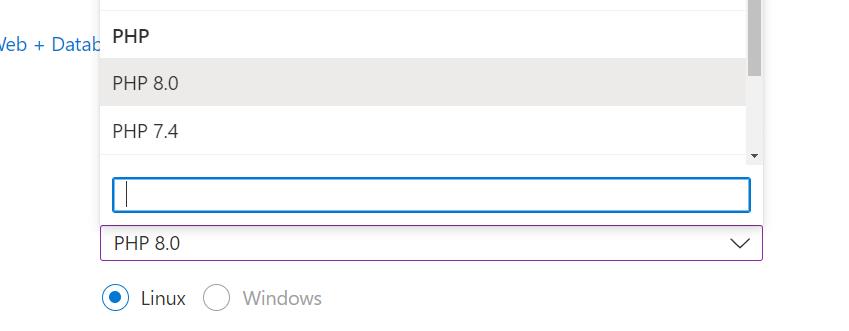
    Microsoft is dropping official support for PHP starting with version 8.0.

    And PHP 7.4 on Azure reaches the end of extended support on November 28, 2022.

    Therefore, if you have any PHP applications (WordPress?) running in an Azure App Service for Windows, you might consider migrating those applications to Linux soon. And upgrading to PHP 8.

    Don’t worry. PHP apps won’t stop working after November 28. They’ll just not be getting any further updates. And you can’t create new applications (using the Portal wizard) for that old language version.
    Read more: https://github.com/Azure/app-service-linux-docs/blob/master/Runtime_Support/php_support.md#end-of-life-for-php-74


    AZURE PLATFORM UPDATES.

    The following announcements were made in the last two weeks:

    • Azure Dedicated Host support for Ultra SSD, in preview
    • .NET 7 support in Linux Consumption Plan, in preview
    • AKS node pool user start/stop feature
    • Azure Dedicated Host restart, in preview
    • Serverless SQL for Azure Databricks, in preview
    • Update management center in Azure, in preview
    • Microsoft Azure available from new cloud region in Qatar
    • Microsoft Dev Box, in preview
    • Automated deployments in AKS, in preview
    • Key management system integration with AKS
    • App Configuration geo-replication support, in preview
    • Reserved instance pricing for Azure Cache for Redis Enterprise
    • Hierarchical forecasting for Azure Machine Learning
    • User-defined routes support for private endpoints
    • Network security groups support for private endpoints
    • UAE North Availability Zones

    Check out the Azure Updates page if any of these affect you.

    https://azure.microsoft.com/en-us/updates/


    COMING UP FOR ME.

    I’m very happy with the launch of the AZ-500 course as of a couple of weeks ago. Thanks to everyone who has enrolled in that on Udemy.

    I have already started on the next course. I’m very excited about it. It’ll still be in the security certification area. Stay tuned for that!


    WHERE TO FIND ME.

    And that’s it for issue 3.16. Thanks for reading this far. Talk to you again in two weeks.

    What is your favorite platform to be on? Perhaps we can connect there.

    Facebook Page: https://www.facebook.com/getcloudskills/ 

    LinkedIn: https://www.linkedin.com/in/scottjduffy/

    Instagram: https://www.instagram.com/getcloudskills.ca/

    Twitter: https://twitter.com/scottjduffy

    Udemy: https://www.udemy.com/user/scottduffy2/

    LinkedIn Learning: https://www.lynda.com/Scott-Duffy/1993589682-1.html

  • Azure World Newsletter – Issue 3.15

    Azure World Newsletter – Issue 3.15

    August 10, 2022

    Welcome to the fifteenth edition of the Azure World Newsletter in 2022. 

    Finally! My new AZ-500 Microsoft Azure Security Technologies course is live on Udemy. Jordi has added a study guide, some labs, and is almost ready to publish a practice test in that course. We’re very excited to see you inside. Check the end of the newsletter for the launch pricing coupon link.

    I’m doing well, and I hope you are too. I am immensely grateful for you as a newsletter subscriber, a student, or just someone I’m connected to on one of the social media platforms. 

    Thanks so much for being a subscriber! The unsubscribe link is at the bottom if you want to stop receiving these emails.


    ONE.

    I missed this announcement when it first came out, but I just saw it mentioned again.

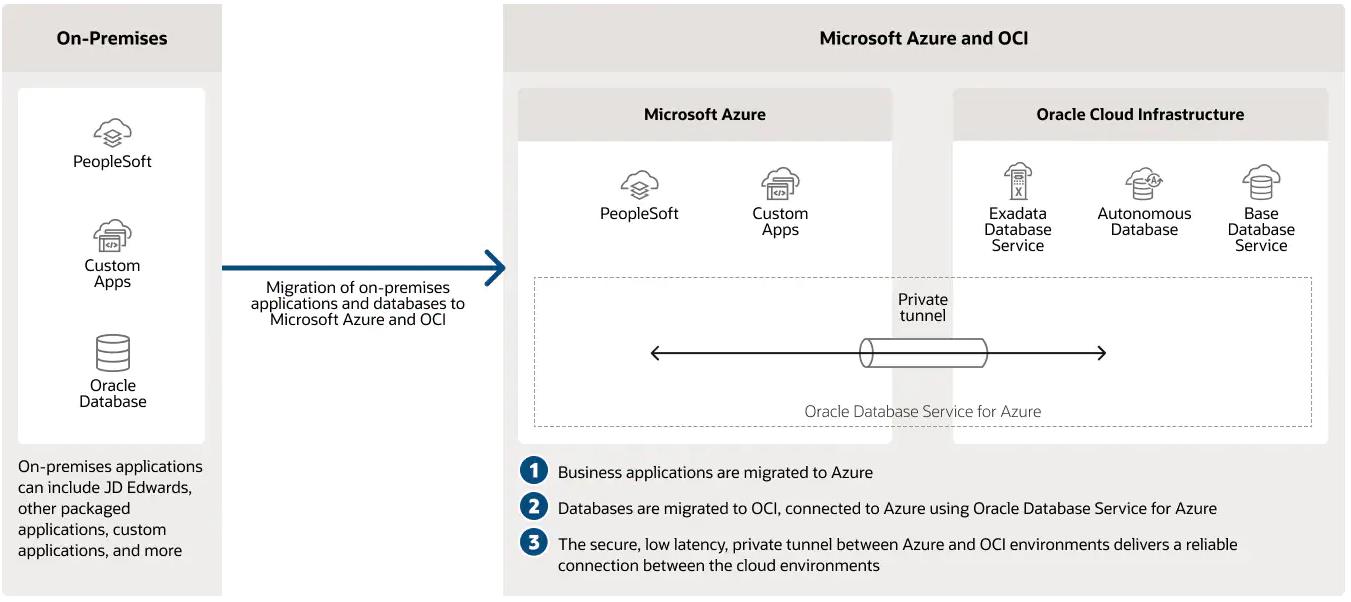
    Oracle and Microsoft have announced a partnership named Oracle Database Service for Microsoft Azure.

    At first, I thought this might be a managed Oracle database in Azure, but it’s more interesting (and complicated) than that. 

    This is connectivity between the Azure Cloud and the Oracle Cloud. You can provision, manage and monitor Oracle Cloud databases in Azure. Which is cool by itself. Similar to how Azure Arc allows you to manage and monitor VMs running in AWS and other locations within Azure.

    But it’s even more than that! You can have your Oracle databases running in Oracle Cloud and have access to them from your Azure applications. And suitable for production use!

    The implication here is very interesting. You can run your database in Oracle Cloud and your applications in Azure Cloud!

    For more information, see: https://news.microsoft.com/2022/07/20/oracle-and-microsoft-announce-availability-of-oracle-database-service-for-microsoft-azure/


    TWO.

    On the development side, Microsoft has introduced a new framework for real-time collaborative experiences called Fluid Framework. This open-source project enables developers to use familiar shared data structures to power a front-end web application with real-time data synchronization to all clients. This was introduced at Build 2022.

    Imagine a team whose members are all working from home. One member updates some data element in their custom app, and every other team member sees that updated on their screen instantly. The Fluid Framework helps build these real-time collaborative apps.

    To build apps that operate like this, there are a set of client libraries that you can include in your applications. And for them to communicate in real-time with each other, they will use a new Azure service called Azure Fluid Relay.

    As of August 1, Azure Fluid Relay is in general availability, which means it can be used in production settings and has an SLA.

    The Fluid Framework client libraries are available at: https://fluidframework.com/
    More information on the Azure Fluid Relay Service is at: https://devblogs.microsoft.com/microsoft365dev/announcing-general-availability-of-azure-fluid-relay-service/


    AZURE PLATFORM UPDATES.

    I don’t recall when there were only four major announcements of new features in two weeks. But that’s OK! I expect they’re preparing some really interesting stuff for the fall. The following announcements were made in the last two weeks: 

    • Azure Public IPv6 offerings are free as of July 31, 2022
    • Azure StorSimple 8000/1200 series will no longer be supported starting 31st December 2022
    • The cost of resources in the US West 3 region has been reduced as of August 1, 2022
    • New Azure Roles called “Reservation Administrator” and “Reservation Reader” in the Azure Portal

    Check out the Azure Updates page if any of these affect you.

    https://azure.microsoft.com/en-us/updates/


    COMING UP FOR ME.

    My brand new AZ-500 course is officially live on Udemy!

    I haven’t actually launched it yet, so you’re the first to know. Right now, you have the chance to watch this course before anyone, and I can’t wait to hear what you think. 

    You can grab the course for the launch price of USD $9.99 for the next 4 days only. The coupon expires 08/14/2022 at 2:39 PM PDT.

    https://www.udemy.com/course/az500-azure/?couponCode=LAUNCH10


    WHERE TO FIND ME.

    And that’s it for issue 3.15. Thanks for reading this far. Talk to you again in two weeks.

    What is your favorite platform to be on? Perhaps we can connect there.

    Facebook Page: https://www.facebook.com/getcloudskills/ 

    LinkedIn: https://www.linkedin.com/in/scottjduffy/

    Instagram: https://www.instagram.com/getcloudskills.ca/

    Twitter: https://twitter.com/scottjduffy

    Udemy: https://www.udemy.com/user/scottduffy2/

    LinkedIn Learning: https://www.lynda.com/Scott-Duffy/1993589682-1.html

  • Azure World Newsletter – Issue 3.14

    Azure World Newsletter – Issue 3.14

    July 27, 2022

    Welcome to the fourteenth edition of the Azure World Newsletter in 2022. 

    I mentioned in the last newsletter about traveling for a quick birthday holiday. My wife and I went to Scotland for a few days, which was lovely. It has never been in my top 10 dream destinations, but I was utterly charmed by Edinburgh and Glasgow. I posted a couple of pictures on my Twitter feed. I would go there again. Thank you, Scotland!

    If you’re looking to save some money on my Udemy courses, the latest coupon code is at the end of the newsletter.

    Thanks so much for being a subscriber! The unsubscribe link is at the bottom if you want to stop receiving these emails.


    ONE.

    Microsoft released its quarterly earnings last night.

    Although earnings were slightly up over a year ago, the numbers were below what stock analysts expected. Revenue was up 12%, while net income was up 2%.

    Azure and other cloud services grew by 40%, which is still great. But that number continues to fall. Analysts were predicting 44% growth in Azure.

    The strong US dollar is continuing to impact Microsoft’s business as people who do not live in the United States do not pay in US dollars. So Microsoft sees declining foreign revenue when converting everything to US dollars.

    As I write this, I think some people are still digesting what it all means. The stock was initially down, but now it’s up. Google also released its earnings around the same time, so the market is really just trying to figure out if we’ll be going into a big recession or not.

    Source: https://news.microsoft.com/2022/07/26/microsoft-cloud-strength-drives-fourth-quarter-results-4/


    TWO.

    For those command-line aficionados, there is a new tool called Azure Developer CLI (azd).

    The Azure Developer CLI (azd) provides a set of developer-friendly commands that map to key stages in your workflow – code, build, deploy, monitor, repeat.

    We should be clear here. The Azure Developer CLI (azd) and Azure CLI are different things.

    The Azure CLI allows you to access the Azure Resource Manager control plane, which allows you to create, modify and destroy Azure resources of all types.

    The azd focuses on developer workflow. You can create Azure resources, but you can also interact with code and deploy projects. For instance, there is an “up” command that does a bunch of tasks in a single step.

    i.e. azd up –template todo-nodejs-mongo

    This will download the template code, initialize a project, and create and configure all the necessary Azure resources. In the end, you’ll have a local clone of the repo, a bunch of resources provisioned in your Azure subscription, and the app has been built and deployed to Azure.

    Of course, this command line tool is reminiscent of the “docker” command line. But instead of only interacting with containers, the azd command line works with App Services, Container Apps, Static Web Apps, and Functions too. One command line to rule them all.

    Source: https://docs.microsoft.com/en-us/azure/developer/azure-developer-cli/overview?tabs=nodejs


    AZURE PLATFORM UPDATES.

    Now that July is here, the pace of announcements has slowed. We still saw a few interesting things. The following announcements were made in the last two weeks:

    • Azure Gateway Load Balancer, in GA
    • Most Face API features to be retired June 30, 2023
    • Migration of Face API out of North Central US Region by June 30, 2023
    • Premium SSD v2 Disk Storage, in preview
    • TLS 1.3 support on Application Gateway, in preview
    • Virtual machine restore points, in GA
    • Customer managed keys for Azure Database for MySQL, in preview
    • Premium-series hardware for Azure SQL Managed Instance, in GA
    • Azure Confidential Ledger, in GA
    • Microsoft Azure Web PubSub Premium Tier, in preview
    • Bring your own Container Network Interface plugin with AKS, in GA
    • Azure Functions support for PowerShell 7.2, in GA
    • Calico for Windows on AKS, in GA
    • Tag filtering in Azure Advisor, in GA
    • Azure Monitor for SAP solutions, in preview
    • Azure confidential VMs (DCasv5/ECasv5-series VMs), in GA
    • Microsoft Cost Details API for EA and MCA customers, in GA
    • Share images across subscriptions and tenants with new Compute Gallery feature, in preview
    • VM Applications – Manage and deploy applications to VMs and VMSS, in GA

    Check out the Azure Updates page if any of these affect you.

    https://azure.microsoft.com/en-us/updates/


    COMING UP FOR ME.

    Several courses need some small updates, and I might look at those as we go into August. No big announcements from me yet. Soon I hope, but not yet.

    Coupon alert!

    I just created a coupon for my Udemy courses today called BDAYCOUPON. Use that code at checkout to ensure the biggest discount I can get. The coupon expires in 5 days. Prices start at US$9.99.

    My Azure and TOGAF Udemy courses are available on the following link: https://www.udemy.com/user/scottduffy2/


    WHERE TO FIND ME.

    And that’s it for issue 3.14. Thanks for reading this far. Talk to you again in two weeks.

    What is your favorite platform to be on? Perhaps we can connect there.

    Facebook Page: https://www.facebook.com/getcloudskills/ 

    LinkedIn: https://www.linkedin.com/in/scottjduffy/

    Instagram: https://www.instagram.com/getcloudskills.ca/

    Twitter: https://twitter.com/scottjduffy

    Udemy: https://www.udemy.com/user/scottduffy2/

    LinkedIn Learning: https://www.lynda.com/Scott-Duffy/1993589682-1.html

  • Azure World Newsletter – Issue 3.13

    Azure World Newsletter – Issue 3.13

    June 29, 2022

    July 13, 2022

    Welcome to the thirteenth edition of the Azure World Newsletter in 2022.

    Fewer announcements are coming out of Redmond, Washington these days as we head into summer. There is a Microsoft Partnership conference coming up (Microsoft Inspire) from July 19-20, but I am not expecting any big announcements from that.

    We also seem to be heading into some economic uncertainty. Many countries are fighting high inflation with increasing interest rates, and that has the intention of reducing economic activity. Many startups have already announced hiring freezes and some are even going towards layoffs.

    That said, there still appears to be a surplus of open positions, and so as some companies let people go, hopefully, others are still in the hiring mood. There is an opportunity for smaller startups to pick up some good people without having to compete with the Facebook, Google, and Microsoft names in the marketplace.

    Thanks so much for being a subscriber! The unsubscribe link is at the bottom if you want to stop receiving these emails.


    ONE.

    Who would have guessed that the global “supply chain” problems would affect cloud computing? If you did, you win a prize.

    Some Azure data centers in Washington State, as well as across Europe and Asia, are claiming that they are having capacity issues due to supply issues. They will prioritize serving existing customers over new customers in those areas.

    Additional reporting claims there are similar issues in the UK for Cosmos DB not accepting any new customers.

    If you’ll recall, when the pandemic started, there was a faster than expected migration to the cloud which caused capacity issues across Azure. Microsoft implemented policies to prioritize certain customers including hospitals since space was limited.

    And now we see similar issues reappearing. Not specifically from the demand for “work from home” as in 2020, but problem has switched to the supply side. There appears to be a lack of some server components.

    This article from The Register isn’t definitive and is more based on interviews with various customers and off-the-record sources. But there might be some capacity issues on the horizon. Azure launched a new capacity reservation feature a couple of months ago so that you can reserve space in your favorite region or data center if you know you need a VM in the near future.

    Source: https://www.theregister.com/2022/07/04/azure_capacity_issues/


    TWO.

    Walmart and Amazon have had a great rivalry. I remember a few years ago, Walmart declaring that they would never use Amazon AWS. Amazon is rather famous for spying on its retail competition and using private information to compete against them. And Walmart doesn’t want to give any more profit to its biggest retail rival.

    https://www.cnbc.com/2020/04/23/wsj-amazon-uses-data-from-third-party-sellers-to-develop-its-own-products.html

    So Walmart was wise to avoid Amazon cloud, and insist on its partners also not using AWS as well. Azure was a big beneficiary of that.

    Fast forward to 2022, and now Walmart is moving away from Azure as well. Where is it going?

    Its own private cloud.

    This too makes sense. Walmart is big enough to run its own hardware. It doesn’t need a third-party with specific server expertise. It can save money doing things itself.

    And maybe one day, we’ll all have the option to sign up for a virtual machine from Walmart. Where the lowest price is the law.

    Source: https://www.bloomberg.com/news/newsletters/2022-07-12/walmart-cloud-weans-itself-off-of-microsoft-azure-google-cloud?sref=GwY6XaFy


    AZURE PLATFORM UPDATES.

    Now that July is here, the pace of announcements has slowed. We still saw a few interesting things. The following announcements were made in the last two weeks:

    • Additional 5000 storage accounts per subscription, in preview
    • Multiple backups per day for VM, in preview
    • Multi-user authorization for recovery service vaults, in GA
    • Backup policy now supports smart tiering to archive tier, in limited preview
    • Confidential virtual machines now support ephemeral OS disks, in preview
    • Container Insights supports Windows Server 2022, in preview
    • Azure Active Directory authentication for Application Insights, in GA
    • Azure Active Directory authentication for exporting and importing Managed Disks, in preview

    Check out the Azure Updates page if any of these affect you.

    https://azure.microsoft.com/en-us/updates/


    COMING UP FOR ME.

    I’m going to take a few days off next week for a little birthday trip. I’ll travel to an undisclosed spot which I’ll tell you about when I get back. 🙂

    I’m still working on the final videos of a new AZ-500 course. I was hoping to have that done by the time you are reading this, but it’s worth the extra wait to get the final videos done.


    WHERE TO FIND ME.

    And that’s it for issue 3.13. Thanks for reading this far. Talk to you again in two weeks.

    What is your favorite platform to be on? Perhaps we can connect there.

    Facebook Page: https://www.facebook.com/getcloudskills/ 

    LinkedIn: https://www.linkedin.com/in/scottjduffy/

    Instagram: https://www.instagram.com/getcloudskills.ca/

    Twitter: https://twitter.com/scottjduffy

    Udemy: https://www.udemy.com/user/scottduffy2/

    LinkedIn Learning: https://www.lynda.com/Scott-Duffy/1993589682-1.html

  • Azure World Newsletter – Issue 3.12

    Azure World Newsletter – Issue 3.12

    June 29, 2022

    Welcome to the twelfth edition of the Azure World Newsletter in 2022. 

    It’s officially the summer season in the Northern Hemisphere, and I hope you have some summer rest and/or vacation plans if this includes you. I have a couple of small trips planned, but nothing major.

    Every two weeks when I write this newsletter, I get a chance to do some research into the world of Azure to see what’s changing. I’ve seen a few articles lately about how Azure has closed the market gap with AWS. Since I’ve covered that before, I won’t cover it here again. But it’s encouraging to see the market realizing how strong Azure is after a decade of calling AWS the clear market leader.

    Thanks so much for being a subscriber! The unsubscribe link is at the bottom if you want to stop receiving these emails.


    ONE.

    “This is why we can’t have nice things.” – Paula Poundstone

    Microsoft recently announced it is restricting the use of a few of its Azure Cognitive Services so that the general public cannot access them without an approved reason.

    Particularly, starting June 2023, developers wishing to use the Face API, Computer Vision API, or Video Indexer Services will need to apply and be approved in order to be given access. Only certain approved use cases are allowed access to those services.

    It’s also removing features of the Face API including the ability to determine facial expressions, emotions, gender, age, smiling, facial hair, and the use of makeup.

    Microsoft said it’s worried about these features being used to discriminate in certain situations.

    Researchers have found that certain uses of AI can lead to worse outcomes in healthcare settings, job applications, and bank loans. These situations (and others) are life-changing outcomes and we rightly do not want companies purposely or accidentally discriminating against people in these situations. It’s illegal in many countries as well.

    This is similar to how Microsoft explicitly restricted access to their AI tools for police services a couple of years ago, anticipating their use in camera surveillance systems. This takes it a step further and restricts it for most people.

    https://redmondmag.com/articles/2022/06/22/microsoft-to-screen-its-azure-customers-on-facial-recognition-use-cases.aspx?m=1

    It’s important to realize that there already exist vast databases containing a lot of information about each of us. Think of the credit score system as an example of that. Social media companies have similarly captured every photo we’ve ever taken over the past 10 years, read our emails and serve ads based on their contents,  track what we search, and which websites we visit. I guess Microsoft doesn’t want its facial recognition technology to be part of some vast advertising or security system. But another company will surely step into the role.


    TWO.

    Security is clearly one of the top challenges of cloud computing. It has been for almost the entire existence of the Internet, and always will continue to be.

    And so it should not be a great surprise that security researchers continue to find some interesting (and scary) bugs that need to be patched before hackers discover them.

    Microsoft recently patched a bug in the Service Fabric hosting platform that allows applications running inside a container to escape, giving them root access to the host Linux operating system.

    The researchers called this exploit “FabricScape”. I give that name a 5/10 score. I feel that there could have been something a bit more catchy if they gave it more thought.

    Well, we don’t want applications to escape their container, so this has been patched.

    Fixes were automatically pushed to Service Fabric Linux clusters starting on June 14. If you allow automatic updates, there is nothing to do. If you do manual updates on your Service Fabric, you better check it. 

    https://www.bleepingcomputer.com/news/security/microsoft-fixes-bug-that-let-hackers-hijack-azure-linux-clusters/


    AZURE PLATFORM UPDATES.

    Azure seems to be previewing a lot these days. I guess it’s a good time for them to release some stuff for testing by the public The following announcements were made in the last two weeks:

    • Azure WAF policy and DDoS management in Azure Firewall Manager, in GA
    • Windows Admin Center in the Azure portal, in preview
    • ExpressRoute Direct and Circuit in different subscriptions, in preview
    • Azure Virtual Network Manager in nine new regions, in preview
    • Durable Functions for Java, in preview
    • Durable Functions for Node.js, in GA
    • Service Bus Explorer capabilities in the Azure Portal, in preview
    • App Service support for .NET 7, in preview
    • HTTP proxy support for AKS clusters, in GA
    • Azure Functions support for Python 3.10, in preview
    • New API backend options in Azure Static Web Apps, in preview
    • AKS release tracker, in preview
    • Azure Key Vault secrets provider on Azure Arc enabled Kubernetes, in GA

    Check out the Azure Updates page if any of these affect you.

    https://azure.microsoft.com/en-us/updates/


    COMING UP FOR ME.

    I finally started on a new course. It’s been a while since I released a new one. I am excited about this one. It’s more than halfway done, and I’ll talk about it more in the next newsletter.

    Other than that, I am taking my own advice and enjoying some very pleasant weather. 🙂


    WHERE TO FIND ME.

    And that’s it for issue 3.12. Thanks for reading this far. Talk to you again in two weeks.

    What is your favorite platform to be on? Perhaps we can connect there.

    Facebook Page: https://www.facebook.com/getcloudskills/ 

    LinkedIn: https://www.linkedin.com/in/scottjduffy/

    Instagram: https://www.instagram.com/getcloudskills.ca/

    Twitter: https://twitter.com/scottjduffy

    Udemy: https://www.udemy.com/user/scottduffy2/

    LinkedIn Learning: https://www.lynda.com/Scott-Duffy/1993589682-1.html

  • Azure World Newsletter – Issue 3.11

    Azure World Newsletter – Issue 3.11

    June 15, 2022

    Welcome to the eleventh edition of the Azure World Newsletter in 2022. 

    Some of you may know that I moved from Canada to Portugal this past winter. So I was able to avoid most of the snow and sub-zero temperatures. (Hey Canada! I love you, but I’m not going to miss the snow!) 

    But as we head into the summer season here in Portugal, I am not sure what to expect. Just as someone born in a tropical climate struggles with their first winter in Canada, the reverse should also be true. It might take me a few years to adapt to the hotter sun here. Thank goodness for air conditioning until then.

    Thanks so much for being a subscriber! The unsubscribe link is at the bottom if you want to stop receiving these emails.


    ONE.

    Microsoft Learn continues to roll out new ways for people to learn Azure. 

    I talked about Exam Readiness videos and Cloud Games in the last newsletter. 

    Shortly after that newsletter went out, they announced Azure Skills Navigator. This is a set of guides designed to help you develop the skills required for certain careers.

    For instance, if you want to become an Azure Solution Architect, there is a Skills Navigator to guide you. They also have guides for the following professions:

    • System Administrators
    • Developers
    • AI Developers
    • Data Engineers
    • Data Scientists

    Each guide is a PDF download. It contains links to the usual MS Learn Paths. As well as the certifications to earn along the way.

    (Of course, I have you covered if you need video courses for any of the certifications. Check out my Udemy profile for those courses: https://www.udemy.com/user/scottduffy2/ )

    The Skills Navigator for each career also contains videos, case studies, diagrams, tools, and other resources. So it incorporates a lot of types of resources in the learning journey.

    Get started with this here:

    https://docs.microsoft.com/en-us/users/lannateh-3810/collections/mjdcwo2gzmz43


    TWO.

    We sometimes talk about how companies choose between the various cloud platforms based on several factors. Price is certainly one, data center locations are another, and the compatibility with existing software and tools might be a third. 

    But what is rarely discussed is “real measured performance.” How does an EC2 instance on AWS perform compared to an Azure Virtual Machine, all things being equal? How does an AWS Lambda function perform compared to an Azure Function app? Also, you can compare network speeds and storage I/O performance.

    Cockroach Labs has been doing annual performance surveys for the last 3 years. This year, they declare a “statistical dead heat” between AWS, Azure, and Google Cloud performance.

    They measure the performance of the cloud platforms across 56 instance types and 107 configurations, over 3000 runs. They measure OLTP, CPU, network, and storage I/O performance.

    In past years, performance was always close. But they were able to pick a winner in each of the categories. For instance, in 2020, Cockroach Labs said all three clouds were within 5% of each other. That’s a really close race. And that race is now a tie.

    Even if you’re not concerned with the performance of other clouds, the research here shows some interesting results for the ideal mix between vCPU and RAM. They measured the observed performance of each Azure instance type and mapped the increase (or decrease) in performance you’ll likely see as you go from one type to another. 

    For example, you’re more likely to see a more consistent performance if your instance has more RAM. Said another way, saving a bit of money by choosing an instance with a lower RAM to vCPU ratio delivers more inconsistent results.

    That report is here if you’re interested:

    https://www.cockroachlabs.com/guides/2022-cloud-report/


    AZURE PLATFORM UPDATES.

    The following announcements were made in the last two weeks:

    • Azure Bastion IP-based connection, in GA
    • Manage Azure Web Application Firewall policies in Azure Firewall Manager, in preview
    • Conversational language understanding (CLU, a successor to LUIS), in GA
    • ExpressRoute IPv6 Support for Global Reach, in preview
    • Trusted launch support for virtual machines using Ephemeral OS disks, in GA
    • MongoDB increases document limit to 16MB, in preview
    • Linux emulator with Azure Cosmos DB API for MongoDB, in preview
    • Azure Cosmos DB serverless container storage limit increased to 1TB, in preview
    • Azure Monitor Agent is available on the latest Linux distros
    • Azure Arc-enabled System Center Virtual Machine Manager, in preview
    • API Management reusable policy fragments
    • Static Web Apps CLI is now available
    • Linux portal editing for Azure Functions, in preview
    • Azure Container Apps support custom domains and TLS certificates
    • Multiple Azure Load Testing features in public preview
    • Azure SDK for Go
    • Private link support in Azure Application Gateway, in preview

    Check out the Azure Updates page if any of these affect you.

    https://azure.microsoft.com/en-us/updates/


    COMING UP FOR ME.

    All of the AZ-900 practice tests (in the video course and in the separate practice test course) have now been updated to the latest exam objectives.

    I have now started re-recording the AZ-305 course. That course is definitely in need of some refreshment. 🙂 I’ll record a few videos for that per day and make my way through it in the month of June.

    Do you know of any courses that can use some updated videos? Tweet at me @scottjduffy and I’ll be grateful for the tip.


    WHERE TO FIND ME.

    And that’s it for issue 3.11. Thanks for reading this far. Talk to you again in two weeks.

    What is your favorite platform to be on? Perhaps we can connect there.

    Facebook Page: https://www.facebook.com/getcloudskills/ 

    LinkedIn: https://www.linkedin.com/in/scottjduffy/

    Instagram: https://www.instagram.com/getcloudskills.ca/

    Twitter: https://twitter.com/scottjduffy

    Udemy: https://www.udemy.com/user/scottduffy2/

    LinkedIn Learning: https://www.lynda.com/Scott-Duffy/1993589682-1.html

  • Azure World Newsletter – Issue 3.10

    Azure World Newsletter – Issue 3.10

    June 1, 2022

    Welcome to the tenth edition of the Azure World Newsletter in 2022.

    Microsoft Build was last week, and I hope you had a chance to watch some of it. As usual, Microsoft publishes a “book of news” that contains all of the announcements in one place.

    https://news.microsoft.com/build-2022-book-of-news/

    I’m not going to be able to cover all of the announcements, and even trying to only cover a few of them is tough as we all have our individual interests. I’m going to talk about some container stuff below, and some certification news. But read the Book of News above for the full suite of news.

    Thanks so much for being a subscriber! The unsubscribe link is at the bottom if you want to stop receiving these emails.


    ONE.

    Containers have been taking over the cloud in recent years, and recently Azure has introduced a brand new container option in Azure: Container Apps.

    Azure already includes a number of options if you want to deploy a containerized app. You can deploy to an Azure Container Instance (ACI), App Services, Functions, Spring Cloud, Red Hat OpenShift, Kubernetes, and even Service Fabric.

    Each of those options comes with its own set of pros and cons. Azure Container Instances are quick and easy, but not scalable. Kubernetes is scalable but complex. App Service is optimized for web applications but not jobs or backend applications.

    I don’t want to say anything bad about Service Fabric, but Microsoft doesn’t talk about it anymore. Kubernetes really stole some of its mojo.

    Anyways, there is a new container compute environment in Azure, called Azure Container Apps.

    Container Apps is a fully managed service for running containers in the cloud and has some cool features. It protects you from some of the Kubernetes complexity as everything is managed in the Portal or CLI, and it doesn’t have its own “kubectl” administrative plane.

    Container Apps is scalable and has autoscale. It can even scale to 0 in some circumstances.

    It can be connected to a Virtual Network for security and can manage HTTPS traffic input without any additional Azure infrastructure in front of it. It can run background processes, microservices, event-driven processes, as well as HTTP traffic.

    Azure Container Apps is a fully-managed container hosting environment, without the complexity of Kubernetes.

    Container Apps is in General Availability and can be used for production apps if you want to try it.

    Source: https://docs.microsoft.com/en-us/azure/container-apps/overview


    TWO.

    Microsoft is continuing to work on its Microsoft Learn website, and there were a couple of certification-related announcements at Build.

    It appears the Learn TV folks are starting to put some “exam readiness” videos together. The first set they launched was for AZ-500. If you’re planning to take AZ-500, these videos might be helpful.

    https://docs.microsoft.com/en-us/shows/exam-readiness-zone/?wt.mc_id=build22_blog_wwl

    They are also exploring new ways to learn with “Cloud Games”. The theory here is that you get to role-play through various real-world tech problems. Imagine a multiplayer game where each player plays a role – cybersecurity expert, compliance expert, identity specialist – to investigate suspicious activity that might be a ransomware attack. An interesting approach.

    https://docs.microsoft.com/en-us/learn/certifications/cloud-games

    There were also some new certifications launched at Build:
    AZ-720 – Azure Support Engineer for Connectivity
    DP-500 – Azure Enterprise Data Analyst
    SC-100 – Cybersecurity Architect
    MS-220 – Exchange Online Support Engineer
    PL-500 – Power Automate RPA Developer

    Check out the following link if you want to learn more:
    https://techcommunity.microsoft.com/t5/microsoft-learn-blog/explore-technical-innovations-and-skill-up-at-microsoft-build/ba-p/2800608


    AZURE PLATFORM UPDATES.

    Microsoft Build brought out a lot of announcements.

    The following announcements were made in the last two weeks:

    • Confidential computing virtual machines (DCsv3 and DCdsv3) are now generally available
    • App Service landing zone accelerator in general availability
    • Azure Arc-enabled Kubernetes landing zone accelerator in general availability
    • Custom node configuration on AKS in general availability
    • Draft extension for Azure Kubernetes Service (AKS) in public preview
    • Windows Server 2022 host support in AKS in public preview
    • Subnet per node pool in general availability
    • Azure Functions Kafka trigger support in general availability
    • Dynamic concurrency in Azure Functions
    • Azure Container Apps in general availability
    • Enhanced elasticity features for Azure Cosmos DB in public preview
    • The ability to call Azure Functions and any REST endpoint from Azure SQL Database in public preview
    • Azure Synapse Link for SQL in public preview
    • Ledger in Azure SQL Database, in general availability
    • Azure Cognitive Service for Language in general availability
    • NGINX for Azure, in public preview
    • Stream Analytics no code editor, in public preview
    • Autoscale Stream Analytics jobs, in public preview
    • JavaScript and Python support in Azure SQL bindings, in public preview

    Check out the Azure Updates page if any of these affect you.

    https://azure.microsoft.com/en-us/updates/


    COMING UP FOR ME.

    For the last couple of months, I’ve been hard at work on a somewhat secret project which I am getting pretty excited about. I think it will wrap up development in the next couple of weeks and I can get back to recording videos and other things.

    I’d like to turn my attention to some AZ-900 practice test updates in the next couple of weeks so I’ll probably do that next.


    WHERE TO FIND ME.

    And that’s it for issue 3.10. Thanks for reading this far. Talk to you again in two weeks.

    What is your favorite platform to be on? Perhaps we can connect there.

    Facebook Page: https://www.facebook.com/getcloudskills/ 

    LinkedIn: https://www.linkedin.com/in/scottjduffy/

    Instagram: https://www.instagram.com/getcloudskills.ca/

    Twitter: https://twitter.com/scottjduffy

    Udemy: https://www.udemy.com/user/scottduffy2/

    LinkedIn Learning: https://www.lynda.com/Scott-Duffy/1993589682-1.html